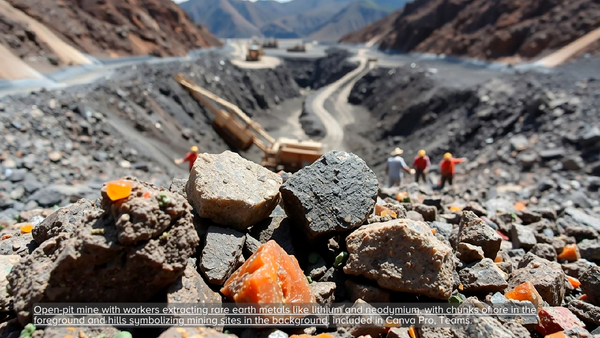
China’s latest export restrictions on rare earths — with 17 metallic elements used as critical minerals in electronics, renewable energy, and defense industries — have sent shockwaves through global supply chains. As the world’s dominant producer and refiner, controlling around 70% of global mining and 90% of processing, Beijing’s move exposes how concentrated and fragile the world’s access to these materials truly is.
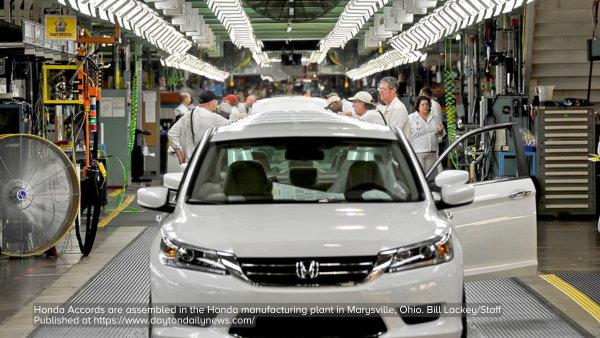
The restrictions, set to take effect this November, have already prompted panic among automakers and technology manufacturers. Rare earths are vital for electric vehicles (EVs), smartphones, and wind turbines. Companies such as Toyota, Bosch, and BMW are scrambling to secure supplies, fearing plant shutdowns similar to those seen during past shortages.
The U.S. and its allies are responding through strategic agreements, including a U.S.–Australia critical minerals pact worth over $3 billion in joint investments and an $8.5 billion project pipeline. The initiative aims to reduce dependence on Chinese refining by developing new mining and processing ventures (White House Briefing, 2025). However, experts caution that most rare earth projects take five to seven years to reach production, making near-term relief unlikely.
In Latin America, Brazil stands out as a potential alternative supplier. With nearly a quarter of the world’s known reserves, Brazil possesses immense geological potential. Yet, its refining capacity remains limited. As Julie Michelle Klinger of the University of Delaware notes, “Reserves in the ground are not the same as production. What matters is what’s economically and politically feasible to mine”.
However, China’s dominance extends beyond mining — it controls 98% of magnet manufacturing and maintains the ability to undercut global competitors on price. As SC Insights’ Andy Leyland warns, “If customers don’t cure their addiction to lowest-cost supply from China, no new projects elsewhere will be viable.”
Ultimately, Beijing’s tightening control highlights a deeper truth: the rare earth crisis is not only about scarcity, but strategic power. China’s monopoly gives it leverage over industries central to the global green transition. While Brazil, Australia, and others may rise as alternative sources, the rebalancing of global supply chains will depend on sustained investment, regional cooperation, and a willingness to trade short-term cost efficiency for long-term security.
References
- Carrasco, J. C. (2025, October 30). As China tightens its grip on rare earths, can Brazil be an alternative source? Rest of World.
- Our Web Desk. (2025, October 21). ‘Situation is very tense’: Global automakers scramble for rare earths as China tightens grip. The Telegraph Online.