Millions of workers across India staged a massive general strike last July 9 in protest against the government’s ongoing erosion of labour rights. Spanning both rural and urban areas, and including workers from formal and informal sectors, the strike was organized by the Joint Platform of Central Trade Unions in India alongside farmers’ organizations and sectoral federations.
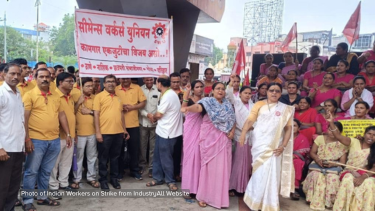
The IndustriALL Global Union expressed full support, hailing the strike as a powerful show of unity and resistance. “Indian workers are showing the world how to stand up to repression,” said general secretary Atle Høie.
The coordinated action comes amid growing dissatisfaction with the recent amendment on labour policies, particularly the legislation made by the Andhra Pradesh state government extending working hours to ten. Workers decry the rising unemployment, stagnant wages, and the mounting cost of living along the intensifying attack on democratic rights.
“This successful strike reflects that the working class in India is totally against the anti-worker and anti-people policies of the present government,” said Sanjay Vadhavkar of the Steel, Metal, and Engineering Workers’ Federation. “We will carry on the struggle until the labour codes are withdrawn.”
The unions’ key demands include scrapping four controversial labour codes, ending precarious employment, halting privatization, reinstating the Old Pension Scheme, and implementing a national minimum wage of INR 26,000 (US$303). They are also calling for the ratification of key ILO conventions on freedom of association and collective bargaining.
With no sign of government retreat, unions warn that this may be just the beginning of further nationwide actions.
Read the original article in the IndustriALL Global Union website.