The electronics industry is often seen as “clean” as it operates in sterile factories and produces no obvious smokestacks. Yet behind the glossy image of smartphones and semiconductors lies a toxic legacy of worker exploitation, hazardous chemical exposure, and environmental harm.
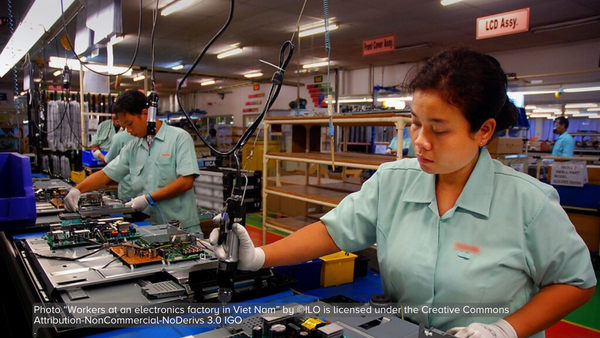
In an article published on their website, ANROEV states that millions of workers face daily risks from unregulated chemicals. From Silicon Valley in the 1970s to today’s global manufacturing hubs in Asia and Latin America, workers, most of whom are young migrant women, have faced serious risks to their health.
Cleanroom employees and assembly-line workers are routinely exposed to hazardous chemicals, often without adequate protection, disclosure, or medical monitoring. Studies have linked these exposures to miscarriages, cancers, birth defects, and neurological disorders. Communities living near factories have also suffered from contaminated water and air.
Despite decades of evidence and advocacy, accountability has remained elusive. Regulatory systems are weak, corporate practices prioritize cost-cutting, and legal loopholes allow companies to avoid responsibility through subcontracting and offshoring. Workers harmed by toxic exposures rarely receive compensation or justice. ANROEV also points out that even in the U.S., safety limits for many workplace chemicals haven’t been updated in decades.
Global advocacy networks such as the International Campaign for Responsible Technology (ICRT) and the GoodElectronics Network have pushed for transparency, safer alternatives, and compensation for victims. In the U.S., coalitions like CHIPS Communities United are demanding that public subsidies for semiconductor manufacturing include enforceable commitments on worker safety, environmental justice, and union rights. Internationally, the ILO and UN-backed frameworks have provided some standards, but enforcement is inconsistent.
The stakes are higher than ever. With governments investing billions in revitalizing domestic chip production, the moment is ripe to demand structural change. Mandatory chemical disclosure, independent health monitoring, safer substitutes, and protection of workers’ rights are essential.
As governments pour billions into reviving chip production, this is a turning point. The future of electronics must be just, transparent, and accountable. To make technology truly “clean and green,” governments, corporations, and consumers must confront the industry’s toxic legacy and ensure that workers and communities are protected. Only then can we achieve a just and sustainable digital age.
Read the full article here.