President Donald Trump has announced sweeping policies on semiconductor imports, warning that companies failing to move production to the United States will face a 100 percent tariff.
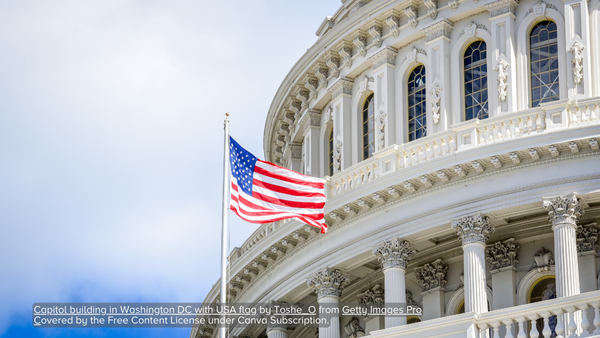
Trump said his administration would target chipmakers that continue to rely on overseas manufacturing. “We will be putting a very substantial tariff,” he told reporters, stressing that companies investing or planning facilities in the U.S. would be exempt. “If they are not coming in, there is a tariff.”
The move is the latest escalation in Trump’s tariff-driven trade strategy, which has already unsettled financial markets and strained relations with major trading partners since his return to office in January. The president has repeatedly wielded tariffs as leverage in negotiations, framing them as a tool to bring manufacturing back to U.S. soil.
Winners and Losers
The tariffs are expected to benefit firms with existing or announced U.S. investments. Apple, which recently pledged to raise its investment commitment in US to $600 billion, was singled out by Trump as being in “pretty good shape.” Meanwhile, Taiwanese chip giant TSMC and South Korea’s Samsung Electronics and SK Hynix—each of which has multibillion-dollar U.S. projects underway—are also expected to avoid the new penalties.
Shares of TSMC jumped nearly 5% after the company confirmed it would not be affected, while Samsung gained more than 2%.
However, Japanese semiconductor stocks sank, and Malaysia voiced concerns about the policy’s impact. “We will continue to negotiate tariff policies that will be imposed for Malaysia to ensure that any changes or exemption criteria are communicated in advance,” Malaysian trade minister Zafrul Abdul Aziz told parliament.
Impact on Workers
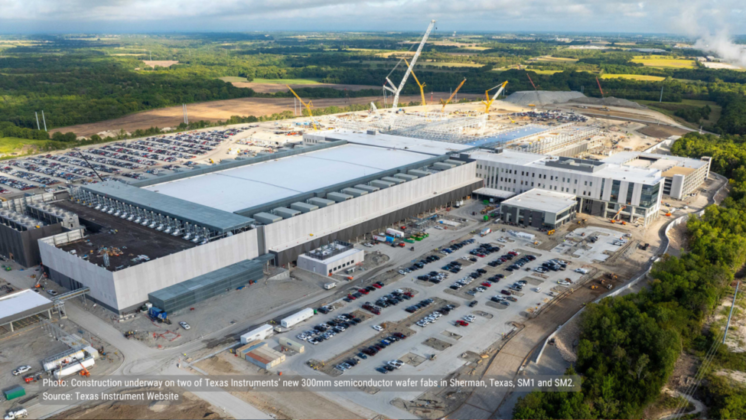
In the United States, the tariffs could spur new hiring in semiconductor hubs like Arizona, Texas, and New York, where TSMC, Intel, and Samsung are already building facilities. Local officials have welcomed the prospect of thousands of high-tech manufacturing jobs, often backed by federal subsidies and state tax breaks.
But labor advocates caution that while construction and engineering jobs may surge, long-term employment benefits for American workers remain uncertain. Advanced semiconductor plants are highly automated, relying more on engineers and technicians than large-scale assembly line labor.
Meanwhile in factories outside U.S., workers in countries like Malaysia, China, and parts of Southeast Asia could face layoffs or wage cuts as multinational firms redirect investment. Malaysia’s electronics sector, which employs hundreds of thousands in assembly and testing, is seen as especially vulnerable if production downsize as tariff increase will effect their demand.
Factories under pressure to remain competitive may cut costs at the expense of workers’ rights and protections. Reduced benefits, longer working hours, or weaker safety standards could become common strategies to offset tariff-driven expenses. The danger is that the burden of these policies will eventually fall on workers—whether through lost jobs or eroded protections.
Global Fallout
Analysts say the tariffs could reshape the global semiconductor supply chain, especially for lower-end chips used in consumer electronics. “This kills producers of low-end chips,” said chief economist for Asia Pacific at Natixis, Alicia Garcia-Herrero in an interview with AFP, pointing to vulnerable manufacturers in China and Malaysia .
High-performance processors powering artificial intelligence and advanced computing are expected to be spared. Still, some experts warn the policy could backfire. “Most of the legacy chip manufacturers in Taiwan, in the U.S., even in Japan face unfair market competition from Chinese firms,” said Chiang Min-yen, a fellow at the Research Institute for Democracy, Society, and Emerging Technology.
“If U.S. policies undermine these companies’ efficiency, Chinese competitors could dominate the field,” Chiang told AFP.
Fight Not Over, Legal Battles Loom
Trump’s reliance on tariffs as a core economic tool has already faced judicial scrutiny. A lower court recently invalidated many of his earlier levies imposed under a 1977 emergency law, prompting the administration to seek Supreme Court review. The semiconductor tariffs could trigger new legal and diplomatic challenges, with allies in Asia and Europe watching closely.
The announcement comes as Washington and Beijing remain locked in a race to control the most advanced chips crucial for AI development and military technology. By pushing firms to localize production, Trump is betting tariffs can realign supply chains—though at the risk of igniting fresh trade tensions worldwide.