Texas Instruments (TI) is investing over $60 billion in seven new semiconductor fabrication plants across Texas and Utah, a move that will significantly reshape the global electronics manufacturing landscape. This historic expansion—supported by $1.6 billion from the CHIPS and Science Act—is a strategic step in consolidating U.S. control over the semiconductor supply chain.
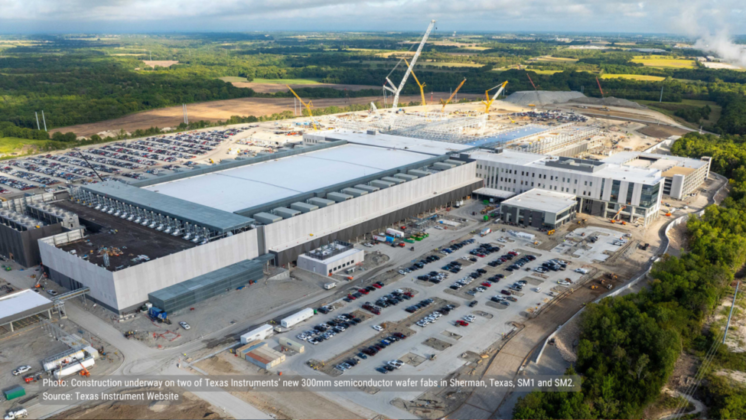
At full capacity, TI’s fabs will produce hundreds of millions of chips daily, reinforcing the U.S. as a central hub for the production of analog and embedded chips used in smartphones, vehicles, medical devices, AI systems, and space technology. With over 60,000 jobs expected, the investment boosts domestic capacity while serving key global tech players like Apple, Nvidia, Ford, Medtronic, and SpaceX.
This move is part of a broader U.S. strategy to re-shore chip manufacturing, reduce dependency on Asian producers, and secure leadership in the next era of advanced electronics and AI-driven innovation. As other nations compete for dominance in semiconductors, the U.S. is aggressively using state funding and public-private partnerships to secure long-term control of a critical industry that underpins nearly all modern electronics.
TI’s expansion, alongside similar multibillion-dollar investments from firms like TSMC, signals a realignment of global electronics manufacturing power, with the U.S. cementing its role as a dominant force in the high-value segments of the supply chain.
Read the original article published in Industry Dive website.