To learn more about Telenor’s actions in Myanmar, please visit SOMO’s case page.
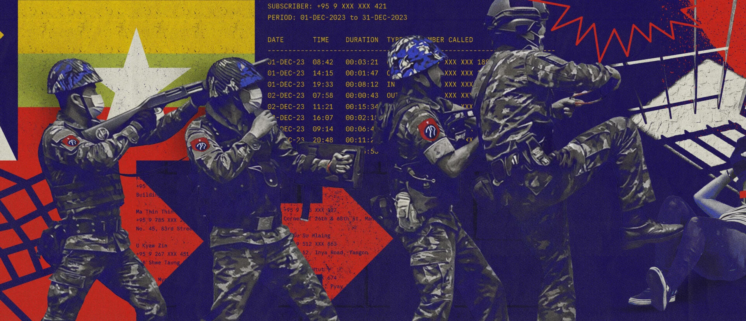
A class action lawsuit filed in Norway on 8 April 2026 is testing a question that sits at the heart of the global technology industry: when a company collects detailed user data and then hands it to a repressive government, who bears responsibility for what follows?
The case was filed by Swedish non-profit Justice and Accountability Initiative (JAI) before the Asker and Bærum District Court on behalf of Myanmar customers whose personal data was shared by telecoms giant Telenor ASA with the country’s military authorities after the February 2021 coup. The data handed over included names, addresses, call logs, last known locations, and national ID numbers — information the military junta used to identify and pursue political opponents. According to the claimants, the disclosure was followed by the execution of a prominent opposition lawmaker and the imprisonment of a civil society activist.
The case carries direct relevance for the electronics and semiconductor industries, which sit upstream of every device that collects, stores, and transmits this kind of data. The chips inside smartphones, the networks that carry calls, and the servers that store location data are all products of a global supply chain that spans Taiwan, South Korea, Malaysia, Vietnam, and beyond. When that infrastructure is used to suppress workers, activists, or anyone exercising basic freedoms, the accountability question does not stop at the telecoms provider.
The lawsuit is backed by SOMO and the Open Society Justice Initiative, and seeks damages of €9,000 per affected customer. SOMO’s advocacy director has called for stricter data retention limits, meaningful transparency obligations, and enforceable protections that prevent companies from collecting sensitive data in the first place — standards that apply equally to device manufacturers, chip designers, and platform operators. Source: Business & Human Rights Resource Centre
When Telenor sold its Myanmar subsidiary in 2022, the transaction transferred all customer data and active surveillance technology to a military-linked company. For electronics workers and labor organizers across Asia, where digital surveillance of union activity is increasingly documented, the Telenor case is a concrete illustration of what it means when corporate data practices and authoritarian governments intersect.
Original article written by Joseph Wilde-Ramsing, and first published in SOMO.